Opus Clip alternative for teams making video ads
OpusClip cuts long videos into viral shorts. Solid turns the same footage into ads you put budget behind. Both start from real footage — the difference is what the output has to do.
Trusted by leading consumer brands










Stay with OpusClip if…
- You are clipping podcasts, streams or webinars for organic reach
- You want the tool to find the postable moments for you
- One long recording in, a batch of shorts out, published in a click
- Nothing you make has media spend behind it
It is built for this and does it well. We are not a better clipping tool.
Look at Solid if…
- The video has to work as a paid ad, not a post
- You need several variants of one idea to test hooks against each other
- The same ad has to run in more than one language
- You want results tracked back against the creative in your ad accounts
Different job, same starting material: footage you already own.
Why look further
Why teams look past a clipping tool
Not because clipping tools are bad at clipping. Because a clip and an ad are judged on different things.
A clip succeeds if it holds attention inside a feed someone chose to scroll. It gets one shot, and if it works, it works. An ad has to earn attention it interrupted — and then keep earning it after the audience has already seen it three times. That second part is what changes the tooling requirement. Creative fatigue is not solved by a better cut; it is solved by having the next five cuts ready.
So the unit of work stops being the clip and becomes the set: one idea, several openings, each sized for the placement it will run in, each traceable back to what it cost and what it returned. That is a different job from finding the best ninety seconds of a podcast, and it is the job Solid is built for.
It is also why teams often keep both. Opus Clip for the organic channel, something ad-shaped for the paid one.
Evaluation
What to look for in an ad-focused alternative
Five questions worth asking of any tool on this list, including ours.
- What is the footage actually made of?
- A clipping tool and Solid both start from material you shot. Avatar generators start from a script and synthesize the person delivering it. Solid will generate b-roll to cover a shot you do not have, but never the subject — that is the part carrying the claim, and the part an audience judges.
- Can it produce several versions of one idea?
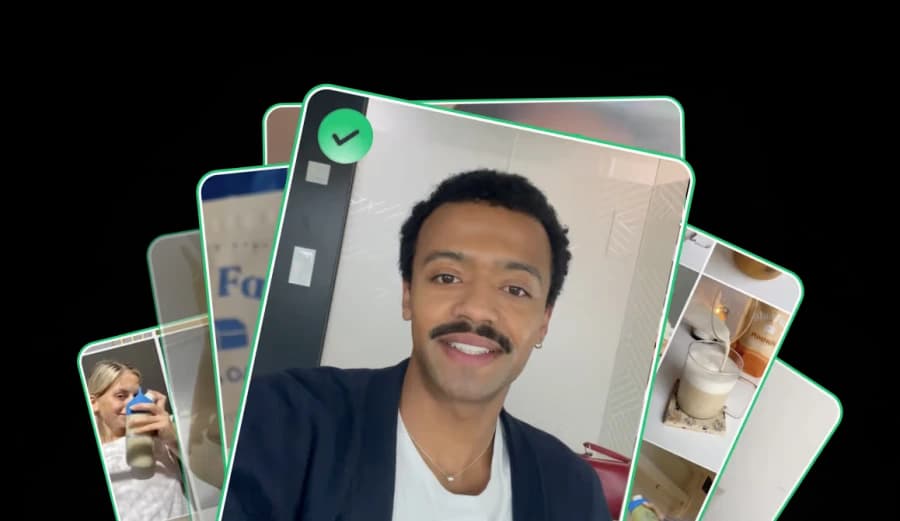
- One good cut is enough for an organic post. Paid creative gets tested, so the useful unit is a set — the same idea with different opening seconds, different pacing, different voiceover — not a single export you hope lands.
- Does it cover every placement ratio?
- Vertical, square and landscape are separate inventory. A tool that reframes to vertical solves one placement; running the same concept across Meta, TikTok and YouTube means producing all three without rebuilding the edit each time.
- Can it localize without filming again?
- If a concept works in one market, the cheapest next test is the same footage with a new voiceover and new captions. Ask whether that is a re-render or a re-production.
- Where does the output land?
- A download is fine when a human posts it. When the creative is going into ad accounts, delivery and the performance data coming back are part of the tool, not an afterthought.
Side by side
Where the two tools actually diverge
They agree on more than most comparisons admit: both start from footage you actually shot. The split is what the output has to do.
| Capability | OpusClip | Solid |
|---|---|---|
| What it optimizes for | Organic reach — clips picked for virality | Paid performance — creative built to be tested |
| Input | One long video (podcast, stream, webinar) | A footage library — creator clips, product shots, past ads |
| Output | A batch of short clips from that video | Ad variants of one concept, in each placement ratio |
| Hook testing | Not described | Multiple hooks per concept, built to run against each other |
| Voiceover | Keeps the speaker’s original audio | Original audio, or generated voiceover where the ad needs one |
| Other languages | Not described | Voiceover and captions regenerated against the same footage |
| Delivery | One-click publishing to social platforms | Export, or publish to connected ad accounts |
| Generated video | Not described — clips and reframes what you upload | Optional b-roll generation (Veo, Seedance) for a shot you do not have; never a synthetic presenter |
“Not described” means exactly that — OpusClip’s public product pages make no claim either way, so neither do we.
Want the full picture rather than the comparison? See how Solid makes video ads.
Testimonials
See what our customers say




With Solid, we’re building our AI system for creative scale. We launch faster, iterate smarter, and turn winning ads into repeatable video ad formats that keep driving ROAS.

Solid powers our creative testing & analytics loop for TikTok at refurbed — taking what works and scaling it through authentic and relatable content. It’s fast, AI native, and always aligned with our brand values. Their product is now an essential part of how we grow.

Solid analyzes thousands of video creatives for us — automatically. We now see correlations we’d never catch manually. That clarity helps us test promising ad combinations smarter, and increase our hit rate for winners. It’s becoming a key part of how we scale.

Solid is a game-changer for performance teams. We’re constantly launching creative tests. At this scale, managing and analyzing variation is chaos. Solid brings structure, speed, and repeatability to our growth workflow.

FAQs
Frequently Asked Questions
Is Solid a drop-in replacement for OpusClip?
No, and it is worth being clear about that. OpusClip is a clipping tool: it takes one long video and finds the moments worth posting. Solid is an ad production tool: it takes your footage library and builds ads you intend to put budget behind. If what you need is podcast clips for organic reach, OpusClip does that job better than we do.
Can Solid cut up a long video the way OpusClip does?
Partly. Solid splits every upload into individual scenes, transcribes them, and tags what is in them, so a two-hour recording becomes searchable material you can build from. What it does not do is score clips for virality or auto-pick the ten most postable moments — that is OpusClip’s specialty, not ours.
Which one is better for podcasts and YouTube?
OpusClip, if the goal is organic reach. It is built for exactly that: long recording in, platform-ready shorts out, published in one click. Solid is the better choice when the clip needs to work as a paid ad — when you need several variants of the same idea, different hooks tested against each other, and the results tracked back to spend.
Can we use both?
Plenty of teams would sensibly do that. They are aimed at different outcomes: OpusClip for organic clipping from long-form recordings, Solid for paid ad creative from your footage library. Using one does not rule out the other.
What does Solid do that a clipping tool does not?
Three things that only matter once money is behind the video. It produces multiple variants of the same concept so you can test hooks against each other rather than shipping one cut. It localizes an ad by regenerating voiceover and captions against the same footage. And it exports or publishes to your ad accounts, so performance data comes back against the creative. OpusClip’s own site does not describe ad accounts, ad variants, or A/B testing.
Does Solid use AI avatars or generated footage?
No avatars — the people in your ads are people you filmed, never a synthetic presenter reading a script. Generated video does have a place: Video Studio produces b-roll with Veo or Seedance when a shot you need is not in your library. The line we hold is that whatever carries the message is real; generated b-roll fills in around it.
What do we need to get started?
Footage. Creator clips, product shots, past campaigns, long recordings — anything you already have. Solid indexes it into scenes and works from there. There is nothing to film first.
Which platforms does Solid produce for?
Paid social — Meta, TikTok, and YouTube — in the vertical, square, and landscape ratios those placements require. You can export the files or publish straight to connected ad accounts.