Superlative Claim
The ad declares the brand or product to be the number-one, first, only or most extreme option in its category.
How to spot it
Bold category claims such as 'Germany's #1 protein bar', 'The world's first...' or 'Our strongest formula ever'.
Verified on real video ads across 116 of 240 tracked brands (887 sightings across 79,497 ads).
Creative strategy
Why use Superlative Claim
Bold category claims like number one, lightest, or first immediately frame your brand as the benchmark to beat. In a noisy social feed, a decisive superlative cuts through cautious phrasing and signals market leadership within two seconds. Buyers looking for a safe default choice gravitate toward the declared leader when the assertion sounds specific and backed by real scope.
When to use it
- Category leaders in skincare, pharmacy health, or apparel reinforce market dominance with audited sales or share rankings.
- Brands launching innovative home gadgets, food products, or SaaS tools draw attention by declaring a verifiable category first.
- Product line extensions work well when copy claims a clear internal superlative like your brand's lightest or fastest option.
When to skip it
- Brands without third-party sales audits, market rankings, or verified test data face compliance risks with number-one claims.
- Casual creator-led UGC scripts feel unnatural when boastful market-leader copy interrupts a relaxed personal story.
Production guide
How to produce Superlative Claim
- 1
Narrow the superlative to a defensible category or attribute, like lightest daily sunscreen or top-selling pharmacy balm.
- 2
Write the exact source, study date, or market scope into a clean, legible footnote to support compliance.
- 3
Deliver the leadership claim either in the opening hook to earn attention or on the closing authority card.
- 4
Connect the superlative immediately to a buyer advantage so leadership feels useful to the shopper.
Common mistakes
- Claiming "best in the world" without clear scope or proof invites skepticism and regulatory takedowns.
- Burying required market-data footnotes in microscopic, unreadable font risks platform compliance rejections on Meta.
- Stacking multiple extreme claims in one short script dilutes credibility and makes the message feel exaggerated.
Field notes
Observed in real ads
- 1
The end card leads with 'Nr. 1 brand for dry skin and atopic dermatitis' backed by pharmacy market-data footnotes to establish category authority.
- 2
On-screen text positions the serum as the brand's lightest UV protection.
- 3
Text asserts category authority by inviting viewers to shop at 'Europe's No. 1 for plus sizes'.
Also called
Cross-layer recipes
Pairs well with
Combine Superlative Claim with patterns from other layers to assemble a complete ad.

Result-First Rewind
The ad opens on the finished dish, look, or project before cutting back to show the steps that created it.

Finished Result First
The ad opens on the completed dish, styled look, or finished project before flashing back to how it was made.
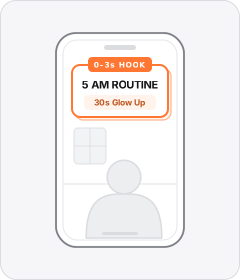
Opening Hook Banner
A bold static headline or title box sits over the opening shot to frame the topic in the first few seconds.
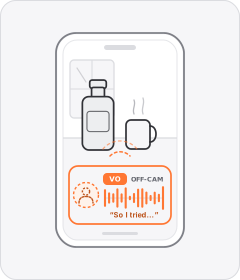
Creator Voiceover
An unseen everyday speaker narrates the ad in a casual, first-person voice over product or lifestyle footage.
Start free
Build a Superlative Claim ad in minutes
Start with 7 days free in a ready-made demo workspace. No credit card required.