Myth Busting
The ad states common beliefs about the category, debunks them, and pitches the product as the informed fix.
How to spot it
The speaker or on-screen text calling out a common belief as a myth or lie before explaining what actually works.
Verified on real video ads across 67 of 240 tracked brands (295 sightings across 79,497 ads).
Creative strategy
Why use Myth Busting
Calling out a familiar belief stops the scroll because viewers want to know what they have gotten wrong. Explaining the underlying mechanism turns the video into useful education and lowers buyer skepticism before the offer arrives. When your product appears near the end, shoppers view it as the logical answer backed by clear proof.
When to use it
- Supplements, skincare, and pet nutrition brands benefit when shoppers hold outdated beliefs about active ingredients or dosing.
- Challenger home gadgets and cookware work well when buyers assume old category rules still limit performance.
- Higher-priced SaaS or wellness offers convert better when education must justify a premium price before the CTA.
When to skip it
- Skip this structure for impulse apparel or snacks where shoppers care about taste, look, or price right away.
- Avoid myth busting if you lack clear proof, because bold corrections with no demonstration trigger immediate distrust in comments.
Production guide
How to produce Myth Busting
- 1
Open in the first three seconds by stating one widespread category belief and immediately labeling it wrong on screen.
- 2
Explain the underlying cause or mechanism in two short sentences using plain language and a simple visual demonstration.
- 3
Introduce your product as the direct answer to that flaw, showing the key ingredient, feature, or design difference up close.
- 4
Close with a concrete benefit summary and a clear offer card so educated viewers know what to do next.
Common mistakes
- Attacking an obscure claim that few buyers believe weakens the opening hook on Meta and TikTok.
- Spending twenty seconds lecturing on theory leaves too little runtime for the product demo and final offer.
- Using a condescending tone makes viewers feel foolish and drives negative comments that hurt ad delivery.
Field notes
Observed in real ads
- 1
The narrative raises a common misconception, uses a demonstration to separate the feared outcome from the real mechanism, and concludes with benefits.
- 2
The ad moves from debunking a common dosage myth and explaining absorption limits to introducing the product as the micro-particle solution.
- 3
The ad opens by calling out misleading industry jargon, pivots to the brand's transparent ingredients and vet-developed approach, and closes with a discount offer.
Also called
Cross-layer recipes
Pairs well with
Combine Myth Busting with patterns from other layers to assemble a complete ad.
 +2 sub
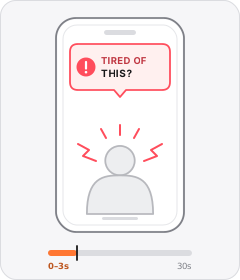
Problem Callout
The ad opens by naming or asking about a problem the viewer has.
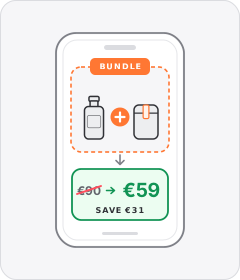
Bundle Offer
The ad pitches a multi-pack, starter kit or set of products together for less than buying them separately.
 +1 sub
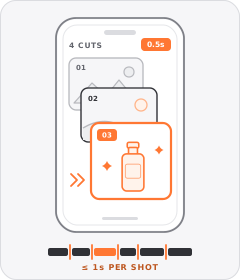
Quick-Cut Montage
The ad strings together a rapid sequence of distinct shots lasting roughly a second or less each.

Street Interview
Someone with a microphone stops people in the street and asks them about the product.
Start free
Build a Myth Busting ad in minutes
Start with 7 days free in a ready-made demo workspace. No credit card required.