Price Comparison
The ad contrasts the product's price against a pricier competitor or an expensive everyday habit.
How to spot it
Side-by-side or spoken cost comparisons against rival brands, daily takeout or coffee runs.
Verified on real video ads across 78 of 240 tracked brands (824 sightings across 79,497 ads).
Creative strategy
Why use Price Comparison
Shoppers struggle to judge whether a price is fair in isolation. Putting your cost side by side with a familiar expense like daily coffee runs, takeout orders, or salon visits creates an instant mental benchmark. When your product delivers the same reward for far less money, clicking through feels like a smart financial win.
When to use it
- Meal kits, home beauty kits, and specialty drinks convert well when benchmarked against takeout or salon visits.
- Direct-to-consumer apparel, eyewear, and home gadgets use price benchmarks to highlight savings over retail store markups.
- All-in-one SaaS platforms and mobile apps shine when compared against paying for three separate monthly subscriptions.
When to skip it
- Premium goods priced above category defaults lose leverage when ads invite buyers to judge purely on price.
- Categories with volatile weekly retail prices make fixed on-screen comparison numbers go stale and inaccurate fast.
Production guide
How to produce Price Comparison
- 1
Anchor against one concrete, recognizable expense that your target buyer already pays for each week or month.
- 2
Use a split screen or two-column receipt graphic so sound-off viewers grasp the savings gap in two seconds.
- 3
Show crisp product craftsmanship right next to the lower price so buyers perceive smart value and strong quality.
- 4
Check that your compared alternative uses current, realistic pricing so skeptical commenters cannot poke holes in the math.
Common mistakes
- Inflating rival or takeout prices makes the comparison look rigged and sparks angry comments on Meta and TikTok.
- Naming direct rivals in ad copy can invite trademark complaints or trigger defensive debates in your comments.
- Talking about low prices without proving product quality trains viewers to view your brand as a cheap knockoff.
Field notes
Observed in real ads
- 1
The presenter argues that because the brand specializes in this category, its prices are much lower than competing brands.
- 2
The speaker urges viewers to try switching their core habit before spending more money on superficial fixes.
- 3
The speaker contrasts the service with spending too much money on food delivery and dining out.
Also called
Comparison & Contrast family
Sibling patterns
Close alternatives that solve a similar creative job.
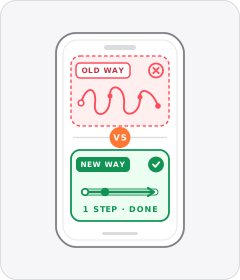
Old Way vs. New Way
The ad contrasts a messy, slow or outdated everyday chore with the simpler routine offered by the product.
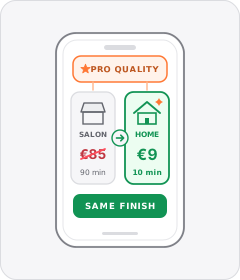
Pro Quality at Home
The ad claims the product gives you at home what you would otherwise pay a salon, restaurant, café or other professional for, in less time and for less money.
Cross-layer recipes
Pairs well with
Combine Price Comparison with patterns from other layers to assemble a complete ad.
 +2 sub
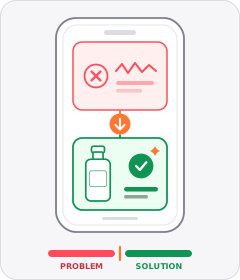
Problem-Solution
The ad establishes an everyday frustration in the first act and introduces the product as the fix.
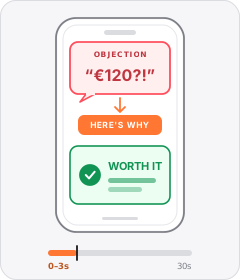
Objection Hook
The ad opens by naming the main reason a buyer might hesitate—such as a high price—and tackling it head-on.
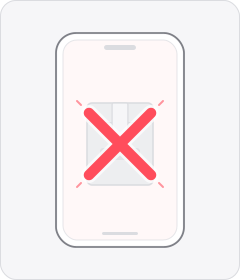
Red X Overlay
A bold red cross or X stamps over a rival option, bad habit or unwanted ingredient to mark it as the wrong choice.
 +1 sub
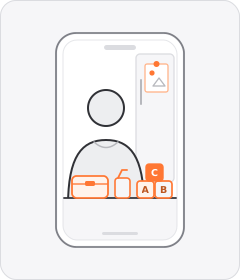
Everyday Parent
A casually dressed mother or father recommends the product from the middle of family life and household routines.
Start free
Build a Price Comparison ad in minutes
Start with 7 days free in a ready-made demo workspace. No credit card required.